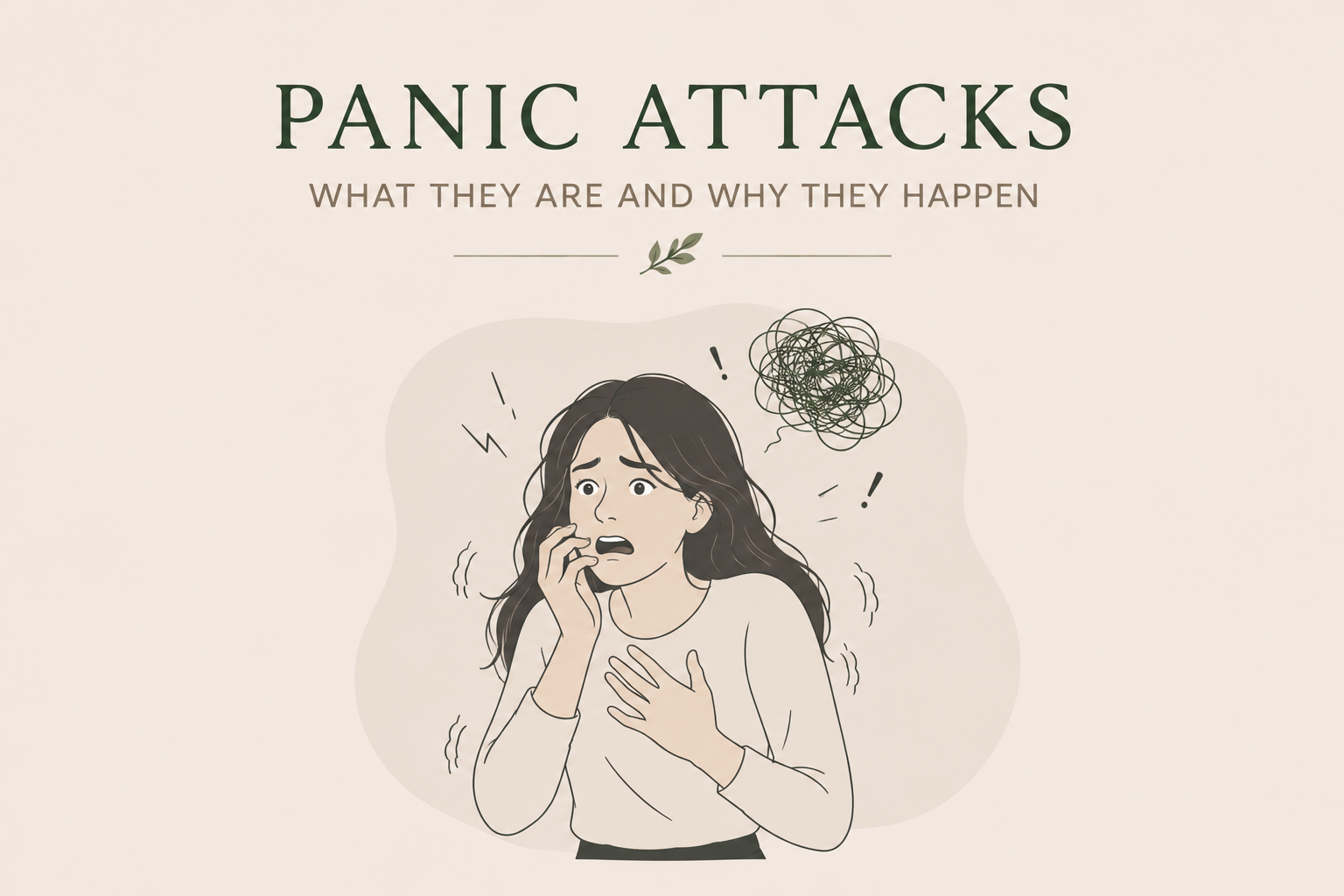
A panic attack is a sudden and intense wave of fear or anxiety, often accompanied by strong physical sensations.
It can come on very quickly and sometimes without any obvious danger at that moment. Because the sensations can feel so intense, many people experiencing a panic attack for the first time may worry that something serious is happening to their body or that they are losing control.
Although a panic attack can feel extremely frightening, the symptoms of panic are linked to our body’s natural response to what it perceives as a threat.
What happens in our body during a panic attack?
When our brain detects a potential threat, the body’s alarm system is automatically activated.
The body prepares itself to respond. Our heart rate may increase, our breathing may become faster, our muscles may tense, and we may feel increasingly alert.
This is a normal and useful response when we are facing real danger.
During a panic attack, however, this alarm system can become activated even when there is no immediate external threat. The physical sensations that follow may then be interpreted as a sign that something is wrong or that something bad is about to happen, increasing our fear even further.
What are the common symptoms of a panic attack?
Everyone can experience panic differently, and you do not need to experience all of the symptoms below to have a panic attack.
Some common symptoms include:
• A racing or pounding heart.
• Shortness of breath or feeling unable to get enough air.
• Tightness or discomfort in the chest.
• Dizziness or feeling unsteady.
• Shaking or sweating.
• Numbness or tingling sensations.
• Nausea or stomach discomfort.
• Feeling unusually hot or cold.
Alongside these physical sensations, intense thoughts may also appear, such as:
“I think something is wrong with me.”
“I’m going to faint.”
“I’m going to lose control.”
“I can’t breathe.”
“I need to get out of here.”
You do not need to experience all of these symptoms to be having a panic attack. The symptoms and their intensity can vary considerably from person to person.
Panic attacks are usually brief, with symptoms typically reaching their peak within a few minutes. Although it may feel in the moment as though they will continue for a long time, their intensity gradually decreases.
The vicious cycle of panic
An important part of understanding panic attacks is recognising the vicious cycle that can develop.
For example, you may notice a physical sensation, such as your heart beating faster.
This might lead to a worrying thought:
“Why is my heart beating so fast? What if something is wrong?”
This thought increases your fear. As your fear increases, your body becomes even more activated. The physical sensations become stronger, which can further reinforce the feeling that something bad is happening.
A cycle can then develop:
Physical sensation → Worrying interpretation → Increased fear → Stronger physical sensations → Even more fear
Understanding this cycle is an important part of therapy for panic attacks.
Why do panic attacks happen?
Panic attacks can happen for many different reasons, and there is not always one specific cause that is the same for everyone.
For example, they may be associated with a particular fear or phobia, such as claustrophobia or agoraphobia, a period of significant anxiety or stress, or other factors that can vary considerably from person to person.
This is why it is important in therapy to explore what may be triggering panic attacks in your particular case, as well as what may be contributing to keeping them going.
Understanding these factors can help us develop a clearer picture of what is happening and tailor therapy to your individual needs and difficulties.
Why might I be afraid that it will happen again?
After experiencing a panic attack, it is very common to worry that another one might happen.
Sometimes, this fear can begin to affect everyday life. For example, we may start avoiding certain situations, going out less often, or stopping activities that we previously enjoyed or felt comfortable doing.
When the fear of another panic attack begins to restrict our everyday life, this can be one of the reasons we may decide to seek support.
How can therapy help?
In therapy, we can begin by developing a better understanding of what a panic attack is, why these intense physical sensations occur, and what feels most frightening to you when they happen.
We can also explore what may be triggering panic attacks in your individual circumstances, identify your own vicious cycle of panic, and understand the factors that may be contributing to keeping it going.
Everyone experiences panic differently. Therapy can therefore be tailored to your own experiences, difficulties and fears, as well as the ways in which panic attacks are affecting your everyday life.
Remember
A panic attack can be an extremely intense and frightening experience, and it is understandable to feel worried about experiencing another one afterwards.
However, panic attacks are something that we can work on in therapy.
By developing a better understanding of what happens during a panic attack, what may be triggering it, and the factors that may be maintaining your individual cycle of panic, we can gradually work towards reducing the impact that panic has on your everyday life.