
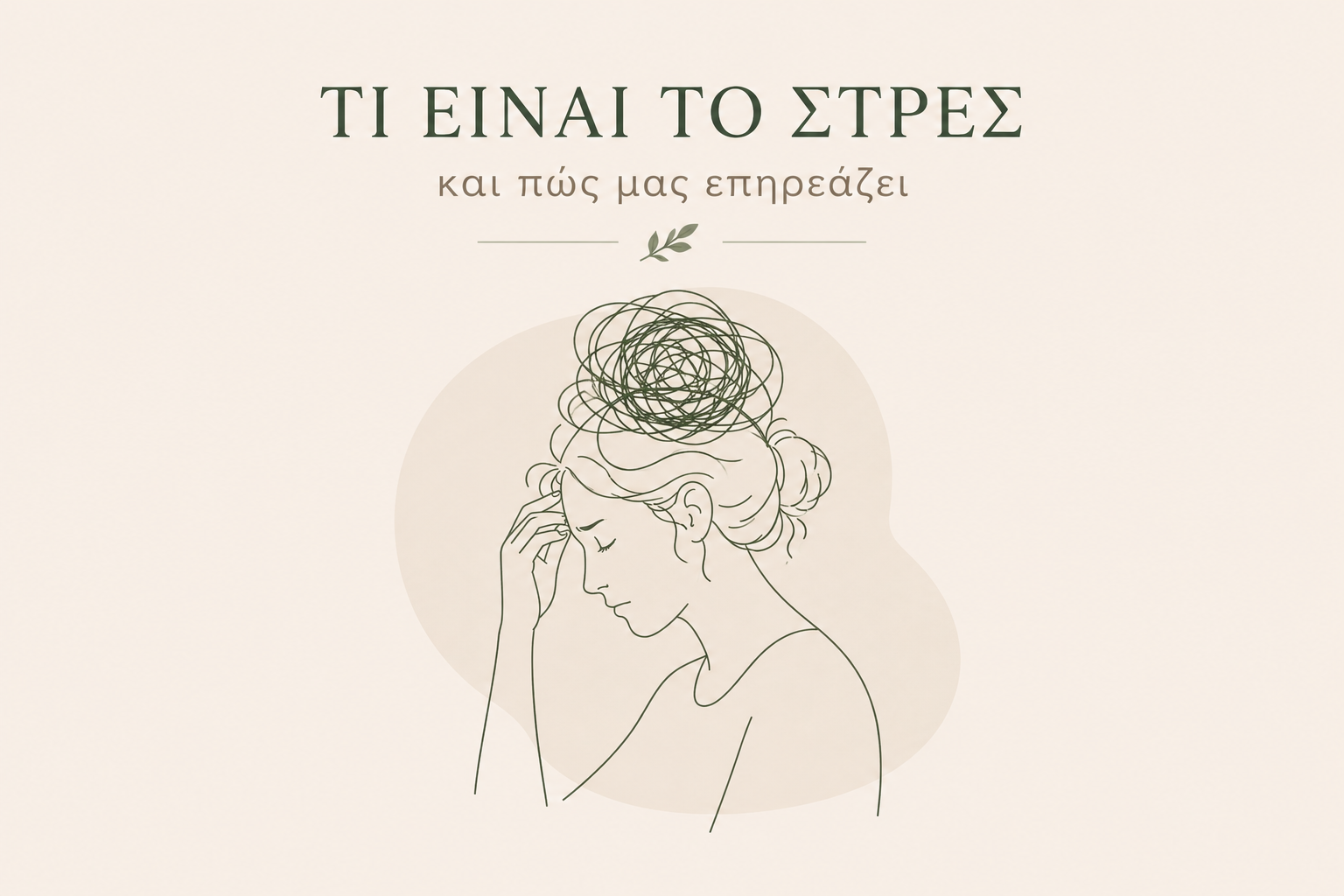
Stress is a natural response that occurs when we feel under pressure, faced with increased demands, or dealing with a difficult situation.
We all experience stress at different points in our lives. It may be related to work, relationships, financial difficulties, health concerns, significant life changes, or simply the accumulation of many smaller demands in our everyday lives.
To some extent, stress is normal and can even help motivate us. However, when it becomes intense or continues for a long period of time, it can begin to affect both our emotional and physical wellbeing.
How does stress work?
When our brain perceives that we are under pressure or facing something demanding, our body becomes activated to help us respond.
Our heart rate and breathing may increase, and we may notice a general sense of tension in our body. Essentially, our system enters a state of increased alertness.
When stress continues for a prolonged period, we may begin to feel as though we are constantly “on the go”. There is always something else to do, something to think about, or something we need to get done.
Even when we finally have time to sit down and rest, we may find it difficult to truly switch off. Our body may remain tense while our mind continues thinking about everything that needs to be done.
How can I recognise when I am experiencing too much stress?
Stress does not look the same for everyone. It can affect our thoughts, emotions, body, and behaviour.
Some common signs may include:
• Constant worry or overthinking.
• Feeling as though your mind never “switches off” and is always thinking about the next thing you need to do.
• Feeling under pressure or as though you have too many things to do and not enough time.
• Finding it difficult to relax or unwind, even when you have free time.
• Feeling as though you always need to be alert, productive, or doing something.
• Feeling more irritable or tense than usual.
• Difficulty concentrating.
• Difficulty sleeping.
• Tiredness or low energy.
• Muscle tension, headaches, or a feeling of tightness in the body.
• A racing heart or changes in your breathing.
• Stomach discomfort or other physical symptoms.
• Changes in appetite.
Sometimes, we can become so used to functioning under pressure that being tense starts to feel normal, and we may not immediately realise how stressed we have become.
When does stress become a problem?
There is no single level of stress that is considered “too much” for everyone.
A helpful way to think about it is to notice how much stress is affecting your everyday life.
If stress begins to affect your sleep, mood, concentration, work, relationships, or ability to rest and enjoy the things you usually like doing, it may be worth paying more attention to it.
It is also important to consider how long it has been going on. Having a particularly stressful week is very different from feeling constantly under pressure for weeks or months.
Why can stress continue even when we try to rest?
Stress is not only about how many things we have to do.
There may be genuine external pressures in our lives, but the way we think about and respond to these pressures can also influence how much stress we experience.
Constant worrying and overthinking, feeling that everything needs to be done perfectly, finding it difficult to set boundaries, or feeling that we constantly need to keep up with everything can all contribute to ongoing stress.
This means that even when we physically stop, our mind may continue: “I need to do this”, “I mustn’t forget that”, “I’m not going to have enough time”, or “What if…?”
This is why managing stress is not simply about telling ourselves to “relax”. It is important to understand what is creating and maintaining stress in our own lives.
How can therapy help with stress?
In therapy, we can begin by developing a better understanding of how stress affects you personally.
We can explore which situations or demands are creating the most pressure and consider which of these stressors can be changed and which may be outside of your control.
Where change is possible, we can explore practical changes that may help reduce some of the pressure. When a situation cannot be changed, we can work on how you respond to it and how you can reduce the impact it has on you.
We can also explore patterns of thinking and behaviour that may be contributing to ongoing stress and develop more helpful ways of managing the demands of everyday life.
The goal is not to eliminate all stress from our lives. Stress is a normal human response, and we cannot always control the situations happening around us.
However, we can learn to recognise the signs of stress earlier, make changes where we can, and develop different ways of responding to the situations we cannot change.
Remember
Stress is a normal part of life, and we will all experience it at different times.
However, if you feel constantly tense, find that your mind rarely switches off, or struggle to truly relax even when you have time to rest, it may be helpful to take a closer look at what is happening.
Managing stress is something we can work on gradually. We cannot always change what is happening around us, but we can learn to better understand our responses and develop more helpful ways of managing the demands of everyday life.